
On a recent trip to the Kodagu/erstwhile Coorg region, my quest for good coffee opened up some interesting people, conversations, and stories. A lot can happen over coffee!
Kannada for coffee
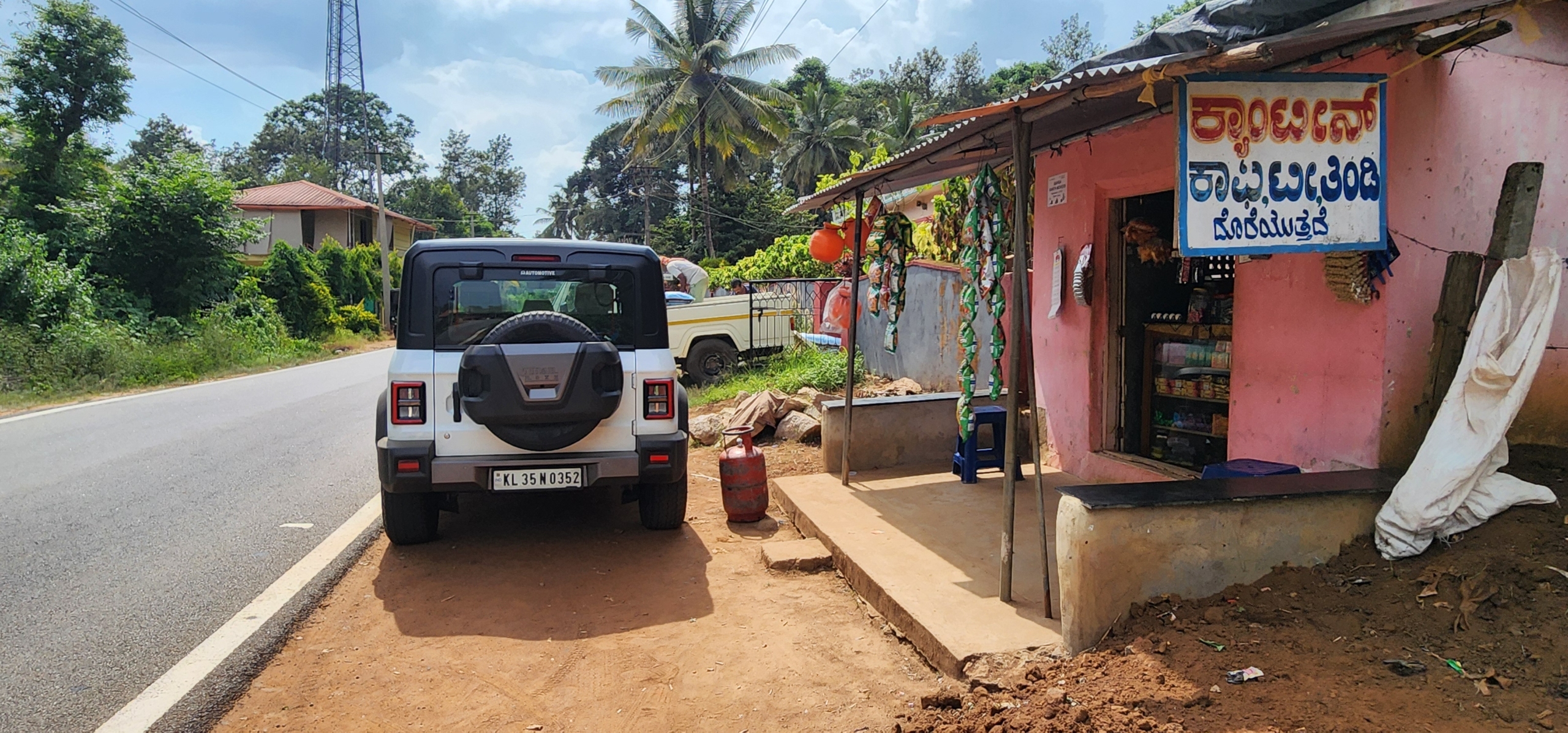
There was no signage – at least none that I could read. It was the gas cylinder that made me stop – surely somebody must be cooking.
I parked and peered inside the congested little shop. There were different grains, flour and sugar in half-open plastic sacks. Gleaming steel canisters held cooking oil with funnels caulking the top, multi-coloured sachets hung on the veranda and crisscrossed the room with their pungent detergent, nuts, instant coffee, and milk supplement contents. Sprightly danglers, sombre in the low-lit interior with their bold names and luring promises.
A portly middle-aged woman in a hasty sari was making tea on a twin burner stove stained with spilled milk. Cut vegetables were strewn across the dried brown flow marks which I assumed to be omelette remnants. Since I had been driving for many hours, I wanted a strong black coffee.
She showed no sign of registration of my request but with one hand still stirring tea, with the other she placed a vessel, filled it with water, and lit the burner. Glasses appeared, one got sugar with a clang, tea whirred out through a sieve – all the while my coffee getting ready. No guy could do that, multi-task with such panache. I asked for an omelette which she began on the newly free burner adding to the cut onions and chillies lying around. Fresh eggs were cracked across a steel tumbler edge and whipped. The coffee came to a boil.
Sitting on the veranda, I ate to my heart’s content, finishing a pack of four buns with my egg and washing down with more coffee. It was great coffee and I told her that.
“It is grown locally,” she told me with quiet pride. Of course. I was in Kodagu.
“You should write ‘coffee and tea’ outside your shop.”
“It is written there, didn’t you see?”
I didn’t tell her it was the gas cylinder why I stopped.
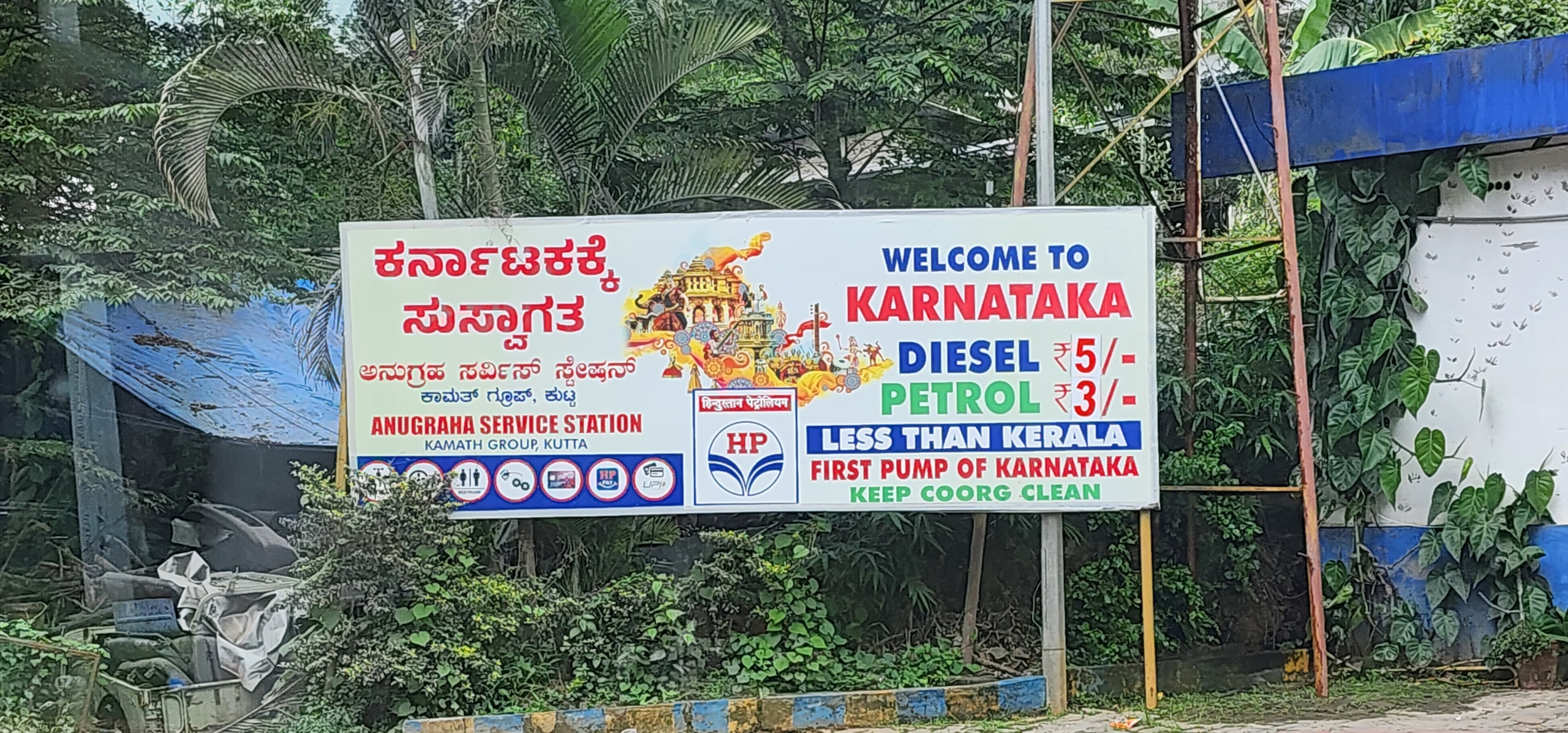
But it made me think of language supremacy, a frequent debate in my part of the world. Here I was subject to a rather cute and harmless version of it – why I didn’t see the shop name when I clearly stopped for what was being sold there. That I might be just passing through was not really relevant, it was the lingo of the land. Didn’t I see it? Not if I could read or not.
Linguistic chauvinism – when the supremacy takes on belligerent tones – grabbed headlines recently when an actor spoke about one language born out of another. An understandable sentiment when you approach language from a learning angle. Theory of learning says children learn languages fast, involving an innate capacity for language and not just conditioning and imitation. ‘The kid is a natural’ is only natural, apparently. That one’s own tongue is the best with everyone else expected to know it might be a bit warped, but not difficult to fathom. Or forgive.
I went out to where she said it was written, took a photo, and slapped my head with an audible ‘oh.’
Portuguese in Pollibetta
1962. War breaks out between India and China.
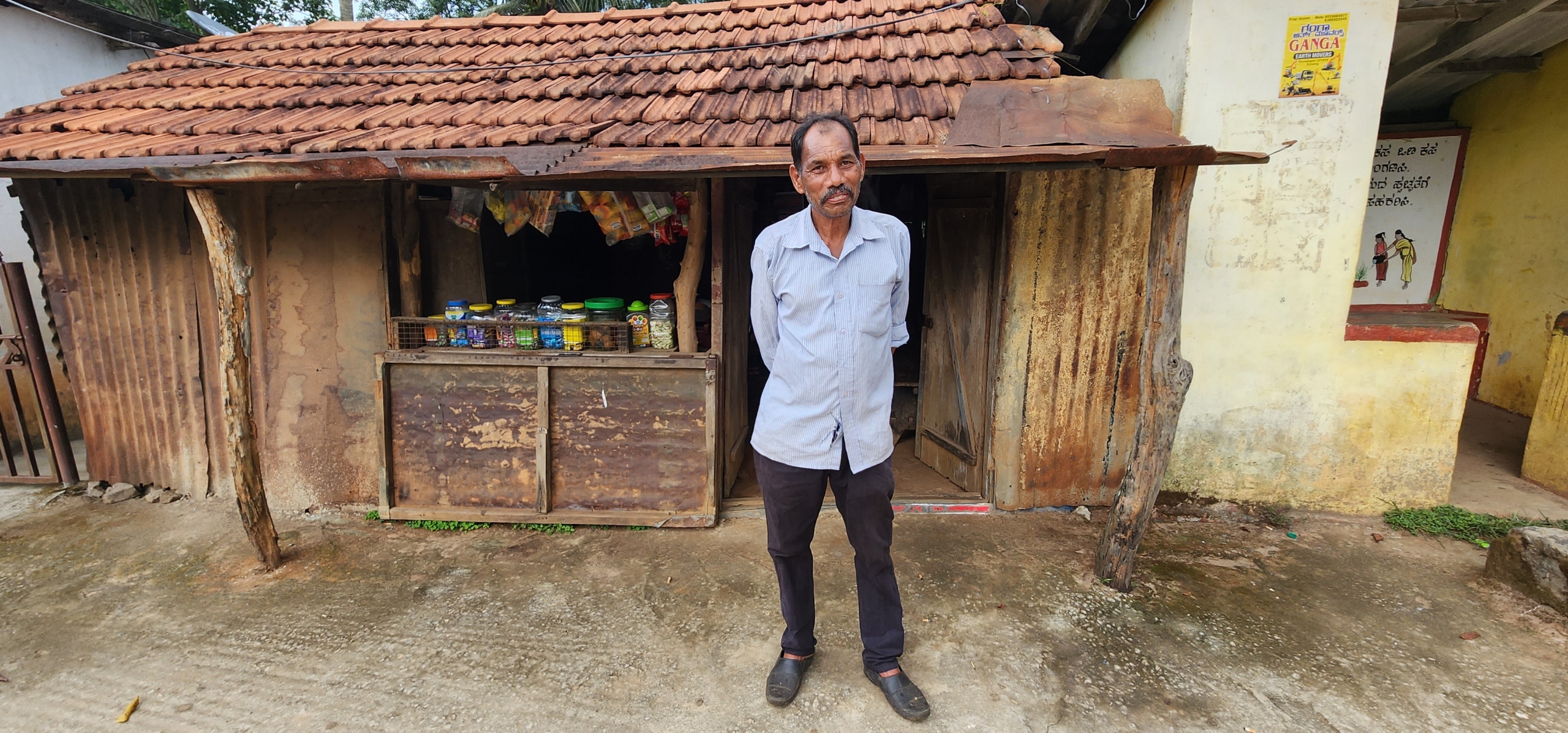
Those who served in the army earlier were recalled, asked to report for immediate duty. The conscription didn’t factor in changed priorities for some like family and children. Like it had for Francis Vaz. His son Edward (68) told me the story while making a cup of strong local brew as I returned from a morning run.
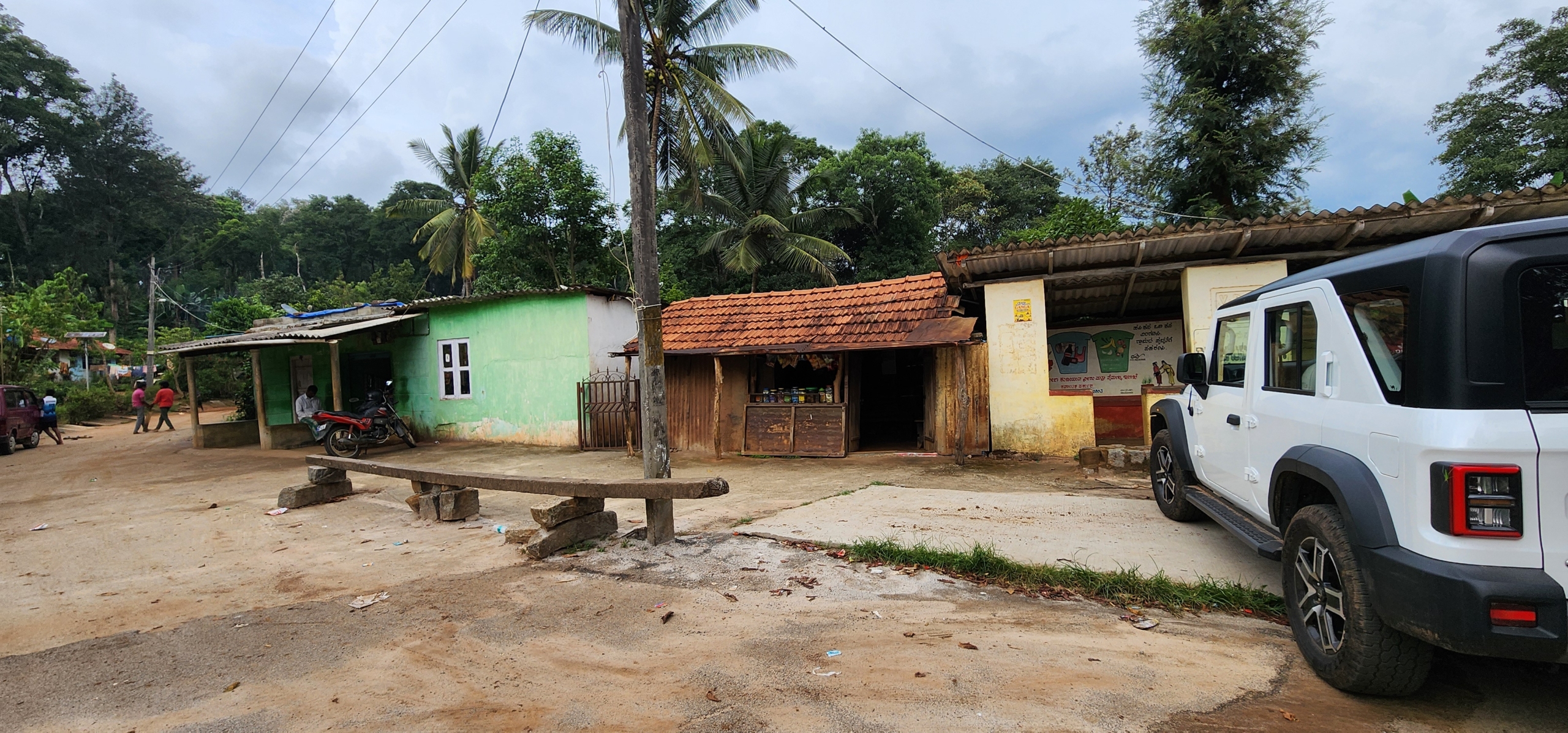
Pollibetta is one of those places which worked hard to earn that bus. It grew organically, slowly, radiating from the village square in the centre, conurbation of one house backyard to another, temple, shop, and the autorickshaw hiring area. The bus was an acknowledgment of all that effort and today lorded over the inhabitants’ regimen. It trundled along the main drag, announcing its arrival from a distance honking or screeching or both, protreptic for extraordinary movement – kids go to school, adults for work, elderly people to the hospital. And I away from the road which I had thoughtfully quiet and all to myself till then.
The village sprouted up as more and more workers came to work in the coffee estates. When plantation is primary revenue, scenic is a default setting. Ladies wearing hooded raincoats get dropped in multiple locations by pickup vans. Older women take cattle and goats out for grazing, peered at you from a distance, and smiled back when you caught their gaze. More successful men rode around 100cc motorcycles busily with helmets held under their arms – taking in the fresh air, like I was. Edward ran a shop near the resort I stayed, the off-roading track where I came to was built into the plantation that surrounded it. He was used to seeing people on beast mode machines, sounding like continuous thunderclaps with mufflers removed for performance.
“By the time the war broke out my father had maybe five or six kids,” Edward said. He kept looking at my head as a way of telling me to watch my head – if I stood fully erect, I’d bang my head against the ceiling rafters of his low-roofed coffee shop. The shop was bequeathed to him by his father Francis Vaz.
Francis had army in his blood. He was the sixth generation of a Portuguese soldier who accompanied Vaso da Gama when he reached Kochi in Kerala in 1524 with his crew of sailors, navigators, kitchen hands, and some soldiers. Edward remembers some records his father held which proved the lineage. But since the family wasn’t keen on any doles or benefits – if at all – they didn’t keep any of it.
“If I wanted any, I’d sit outside the ‘Kappal Palli’ (St Francis Assisi Cathedral, Marine Drive, Kochi) with a begging bowl and I’d make enough money.” A true Keralan, proud.
With savings set aside from his army days, Francis came to Kodagu in 1962 and bought two acres of coffee estate. Setting up house in the plantation, growing necessary farm produce for his family – which grew to 13 kids over the years – he worked parttime in nearby coffee estates to makes ends meet. Today after marrying off his sisters and dividing the rest among the brothers, Edward is left with 25 cents of land. However, his yakka paying rich dividends which meant Edward never went on the wallaby. Both his kids are gainfully employed in the nearby town.
“More than actual hunger, it is the fear of hunger that makes it worse,” he said, shoulders in a perpetual shrug and rarely blinking eyes that never needed a reveille. “I grow all the vegetables we need in my land. For what I need to buy, I make by selling our famous Kodagu coffee.”
Maybe it was the coffee or story or both, I asked Edward for another cuppa.
A different drive
Dungeon crawl is life.
I have been around teenagers long enough to accept video games into my life with the same enthusiasm and emotion of a woman getting to know her husband’s secret wife the day he was laid to rest. With heedless angst and eventual resignation. Traumatic sighs make for invalid drama. Others look at you with nod-head sympathy but you know it is just a façade; it is schadenfreude, actually.
Serves him right. Didn’t he laugh when my kid ran away screaming taking the earthworm to be a baby snake?
Why does he go around showing off the calluses of his palm as the work of a hoe? ‘You don’t get it holding a mouse,’ he gloats.
It broke my heart when a kid once questioned my weekend farming with ‘Why don’t you just go to a supermarket like everyone else?’
Then not all is lost.
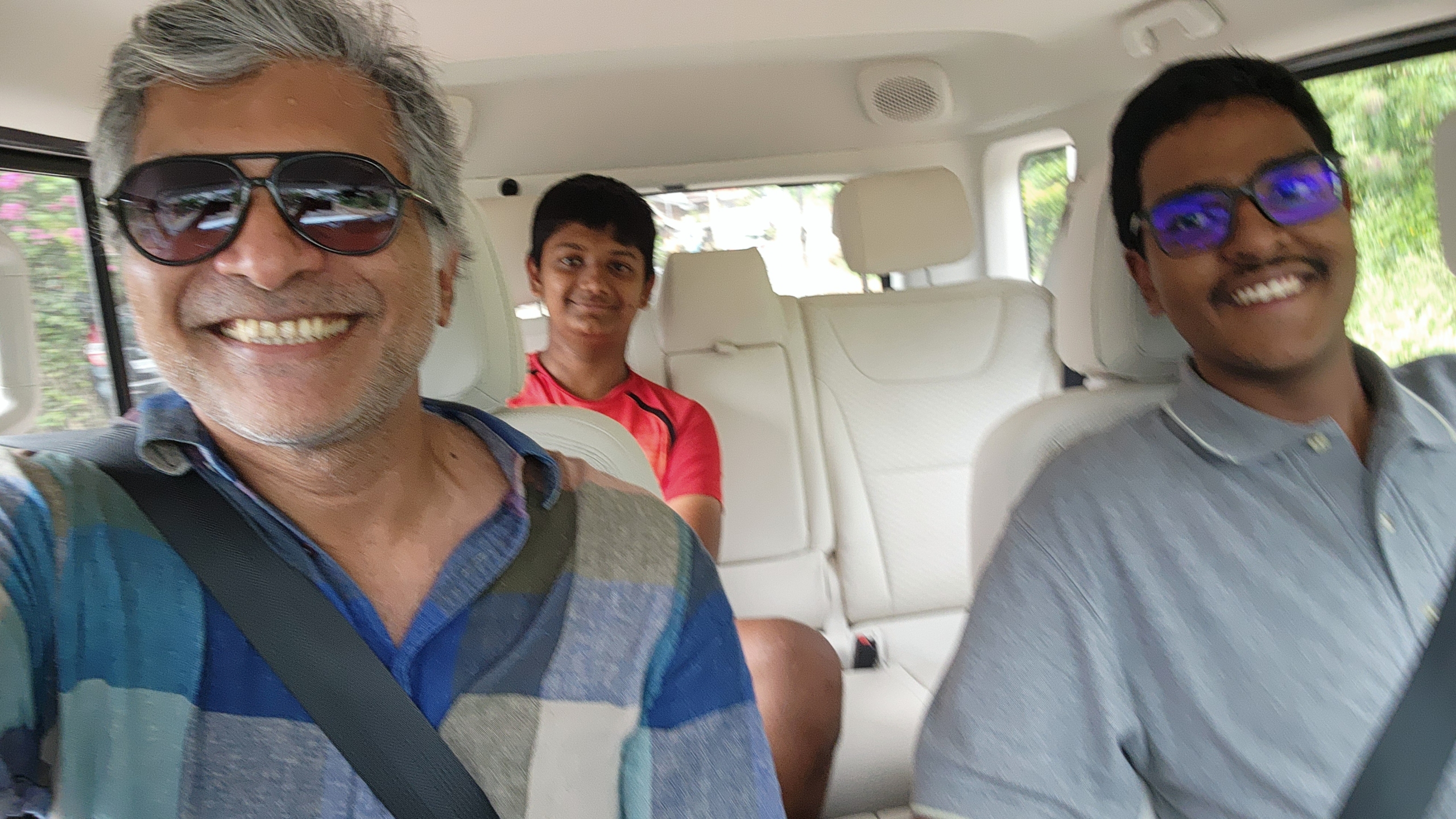
Enter Timothy and Deep. Sons of friends, one who is an off-roading trainer and the other the track owner. Both immersed in the automotive way of life. The fruit doesn’t fall far: both the kids are driving enthusiasts, with machine and track expertise individually. Sent with me to buy local coffee from a certain shop, they shared updates on their newest project: stripping down an old MM540, reworking the core, better shocks in the market, welding skid plates and bull bars. A welcome respite from staccato gunfire, and gore splayed like party confetti.
“Will you be doing the differential lock yourself?”
“I will be, but dad has agreed to help.”
“Hey, I got a minor headache? You got your Axe oil by any chance?”
“Can you make do with some engine oil for now?”
Touch grass.