
Angola once topped the Mercer’s cost-of-living index. Ahead of the traditionally expensive ones like Japan, Singapore, or Switzerland. A very difficult qualification to understand or appreciate. You can see urban slums with makeshift tents by the main streets of capital Luanda, staring, uneasy galère along the promenade, women with children tied around their backs sternly avoiding your eyes like staunch misanthropes, unfinished high-rises which are a common theme which followed my other travels into Africa’s conflict, and ravaged zones, including Libya recently.
Despite being one of Africa’s largest oil producing nations, majority of Angolans live in a poverty that Mercer’s doesn’t bother with. Many African nations have perfected the art of being rich and poor at the same time. Angola, Libya, or Namibia are classical case studies. I remember the sensory jolt first time I ventured from Namibian capital Windhoek to suburbs Katutura. From leafy, wide lanes and big cars, luxury houses and well-fed, white faces to the zeitgeist of the slavery period come alive. I still haven’t gotten around to writing about it.
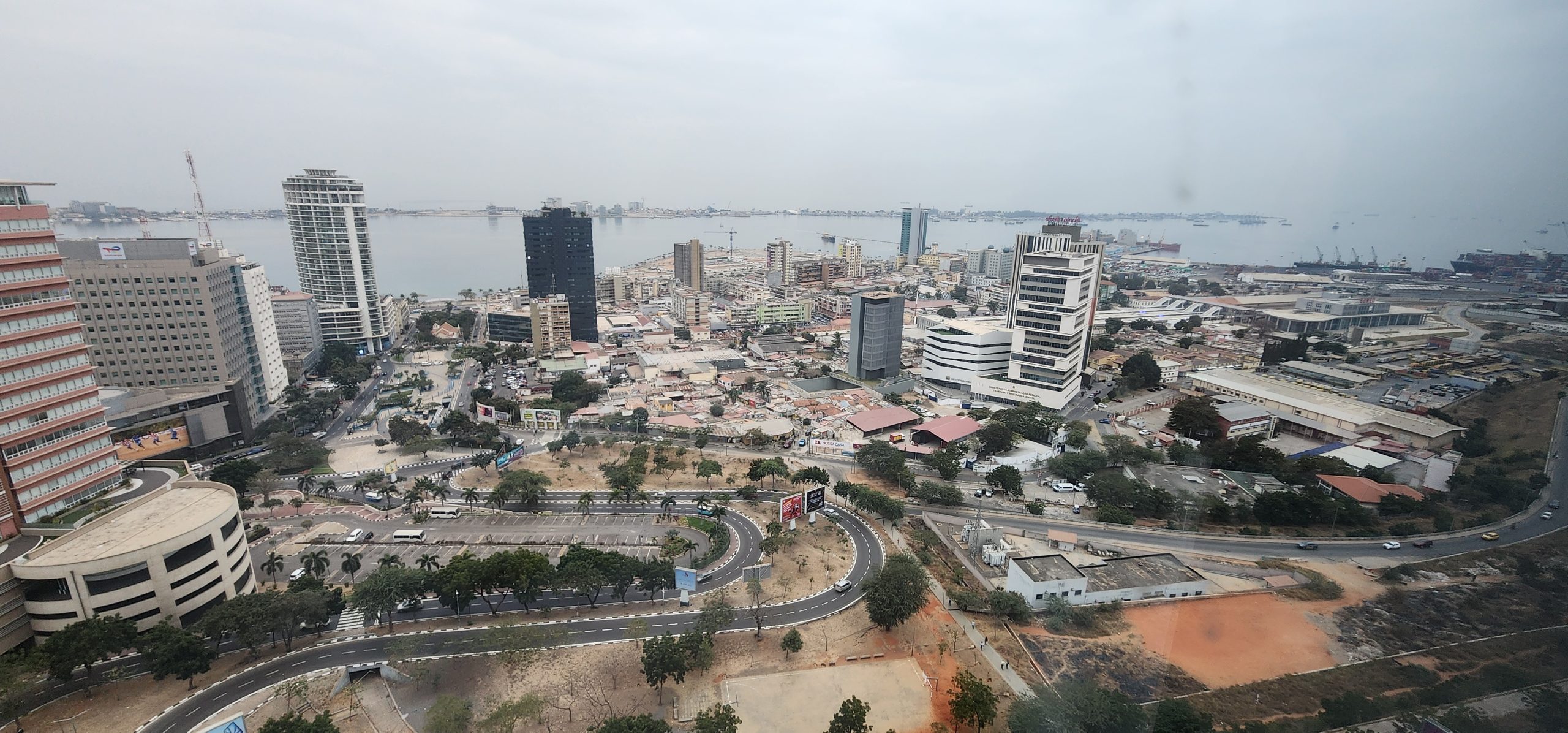
This is a narrative on Angola, from a trip not so long ago that nothing has changed. Elections have been announced, some were Russians arrested for espionage and political sabotage, but the economy still hobbling, and spirits remain high.
Life as usual in Africa.
Bay watch
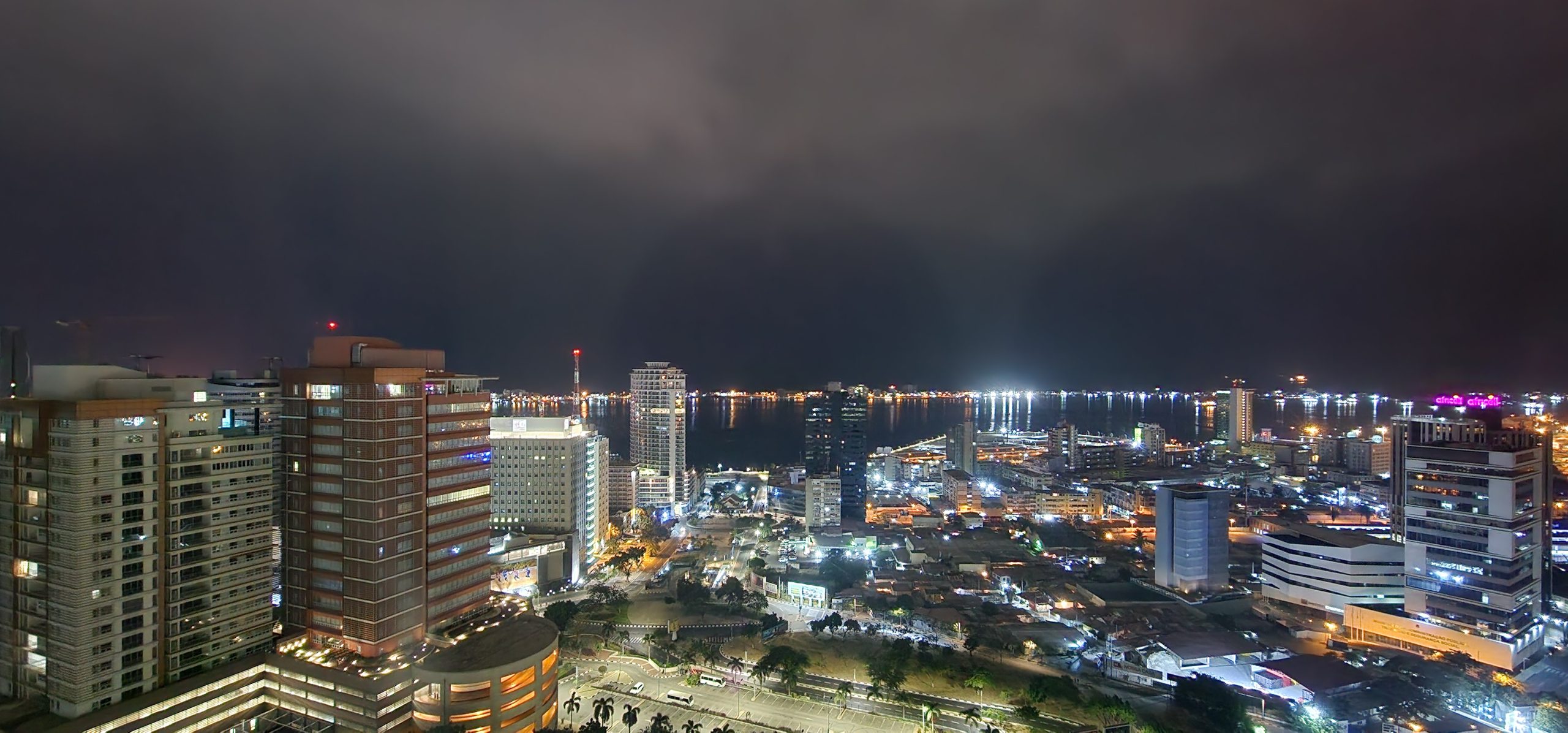
In capital Luanda for a work meeting, I was staying at the Intercontinental near the sea. An architectural marvel, unlike most Intercons I have seen, at over 100 metres and shaped like a diamond. Well, I was told it was a tribute to Angola’s stature as a global mining hub. But bang in the middle of all the equally unmissable native poverty? I thought it stood tall insensitive to local circumstances than a tribute as envisaged by the architect. On the upside, not many seem to know these little details.
A hop skip away from the hotel is the Marginal, the seafront that curves around the bay. There was an open-air gym manned by a muscled lothario from whom I tried to learn a thing or two. The place came alive before sunrise and after sunset with joggers, children with footballs, and women selling roasted corn and peanuts. I especially loved the peanuts, the largest I had ever seen. Behind me were glass towers that looked like as if they were airlifted from Dubai, mostly empty. Their facades reflected the shiny horizon – a bright future teasing. Closer to me were old Portuguese-era buildings with balconies that had seen better times and laundry flapping away roadside dust.
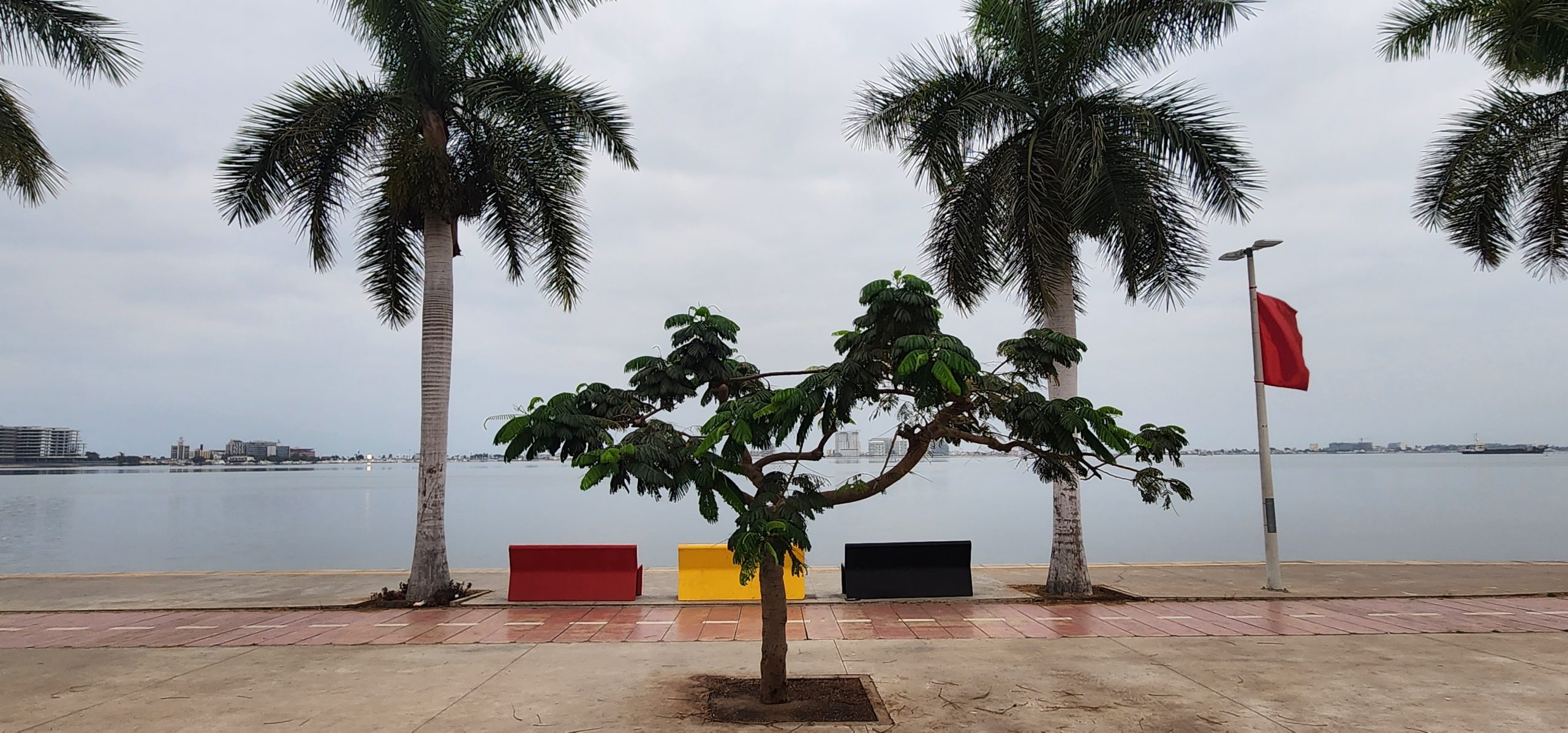
Nzinga People / Life is now
Venturing alone farther from the busy Marginal – something I was advised against – there was the Fortaleza de São Miguel, dating to the city’s founding in 1576. Head still held tenuously high, its cannons pointed politely at an ocean that was no longer a threat. Luanda was, at one time, one the biggest embarkation points of the Atlantic slave trade. The fort still carried this heavy history quietly. The air is palpably laden, something I felt at the ‘House of Slaves’ on the Goree Island off Dakar in Senegal. Reading up later, I learnt that feeling heavy in a place with dark history is only human. Here our minds are driven by a combination of psychological priming, evolutionary survival instincts as well as environmental factors. While the first two were easy to understand old, abandoned buildings apparently emitted low-frequency sound waves that were below our hearing levels. These were also causative of unexplainable dread and dizziness.
Okay, poor electrical wiring could also do all of these. But let’s go with the more exciting bit.
Luanda has its National Museum of Slavery, with a chapel on the shore where captives were baptised before shipped to Brazil. A time to reflect, pray, and be thankful even.
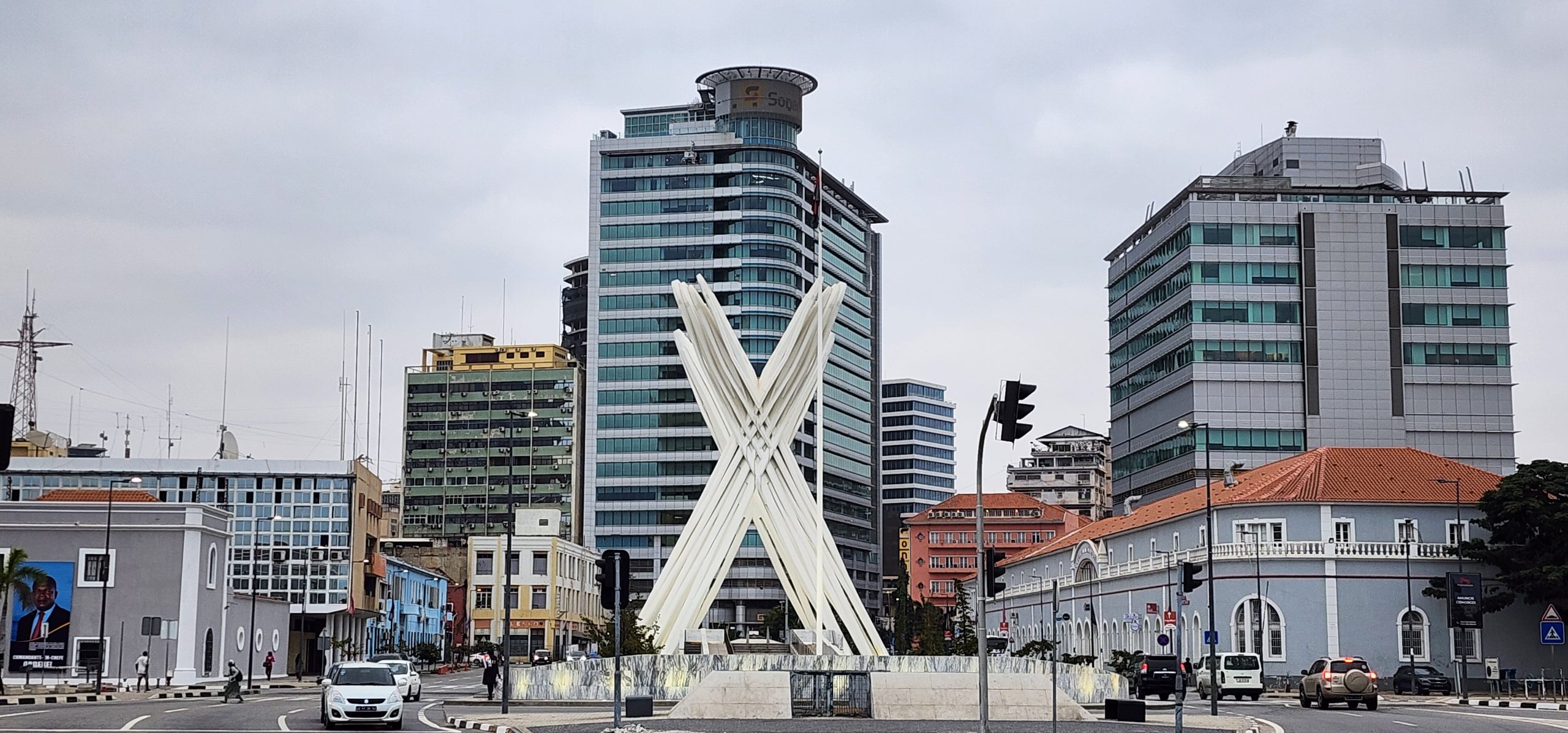
On another evening, I went to the Kinaxixi town square with the statue of Queen Nzinga, the seventeenth-century ruler who outfought, outwitted and outlasted the Portuguese for decades. Legend has it she had her umbilical cord wrapped around her neck symbolising strength and wisdom though I am not sure if the statue-maker has indulged that little winding detail. A formidable woman, there are already movies and documentaries on her. Most women in the square looked like the Queen – powerful with a stately presence. The men were there, pleasant dandies and responsible daddies. The brimming square and the bustling capital were one world within another, though cut off from each other, at least on the surface.
If Africa had a theme, it would be: This life, now.
Right after my heart
Work over and a weekend, we went to the Ilha de Luanda, passing by the Sao Miguel Fort. This is a seven-kilometre-long spit and peninsula separating the Luanda Bay from the Atlantic Ocean. Beautiful hotels, walled houses and bungalows, most of which are nightclubs today dot this sandy stretch. I asked my cabbie to halt several times to have a closer look at vehicles parked along the road – from 70s series Land Cruisers to the rare Opel Kadett (‘Superboss’) to the rarer Ford Sierra. The Sierra, of course, took a longer admiration, owned by a nightclub owner. Manufactured in South Africa, this one was straight out of ‘Fast and the furious’ packing a 5.0 litre engine from a Ford Mustang into a standard Sierra hatchback. Indian readers please note that the Ford Sierra is distinctly different from the Tata Sierra (recently relaunched, which I took for a drive from Delhi to Srinagar, Leh and Umling La).
By another nightclub side I saw the very ruggedly handsome Mobius 3 parked in the dark emitting serious muscle vibes. Made by, as not many knows, the Kenyan automobile maker Mobius. This was Africa at its ‘what it can’ best. After some setbacks, the company is now back on track.
We went to one of the swankier restaurants where an open barbecue was grilling fresh fish directly off the Atlantic bang next to it. Served with beans, plantain, cassava and washed down with Cuca, local beer. This was a distinctly local dish, mufete; I make it a point to eat local wherever I am, whenever I can. Many visits to the loo for many things, including just gawking and laughing at the signs: a man figure for the men’s, a woman for the ladies’ and a married couple for the handicapped.
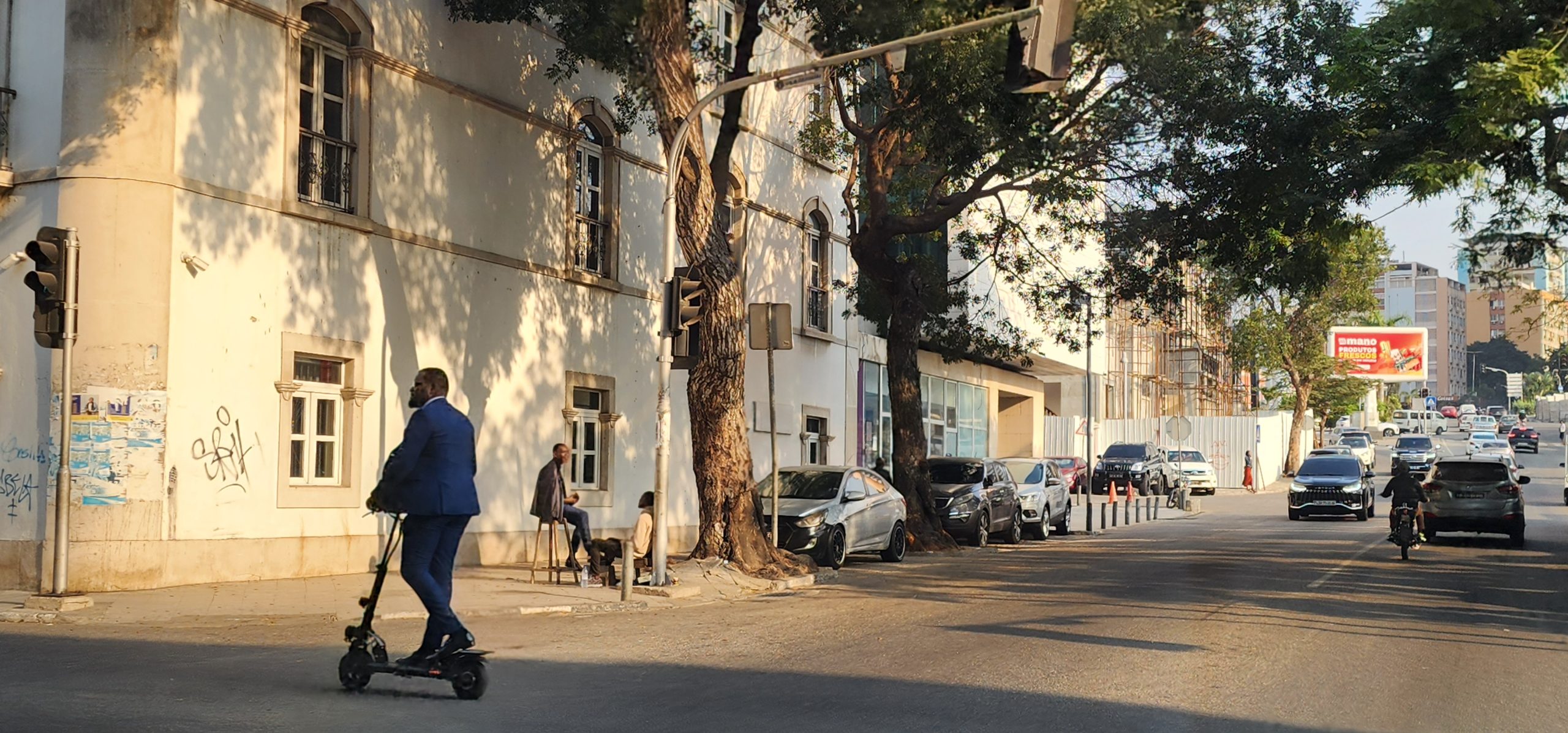
What if the people of Angola didn’t speak English, they made up with friendliness and fun. This very quality was to save the day on many occasions of my stay.
Earth quack
The walk from the Intercon to the sea was memorable. I passed by a church where acapella notes mingled in perfect harmony with the not-too-distant Atlantic rollers. Dawn shrugged through an overcast sky. A spot of workout, a long walk, some laughs and brief friendships. I repaired to little café with dog-eared menus, smelling of freshly baked bread, buttered eggs and friendly banter from all around.
Since asking for ‘omelette’ didn’t pass muster, I trusted my acting abilities to do the honour.
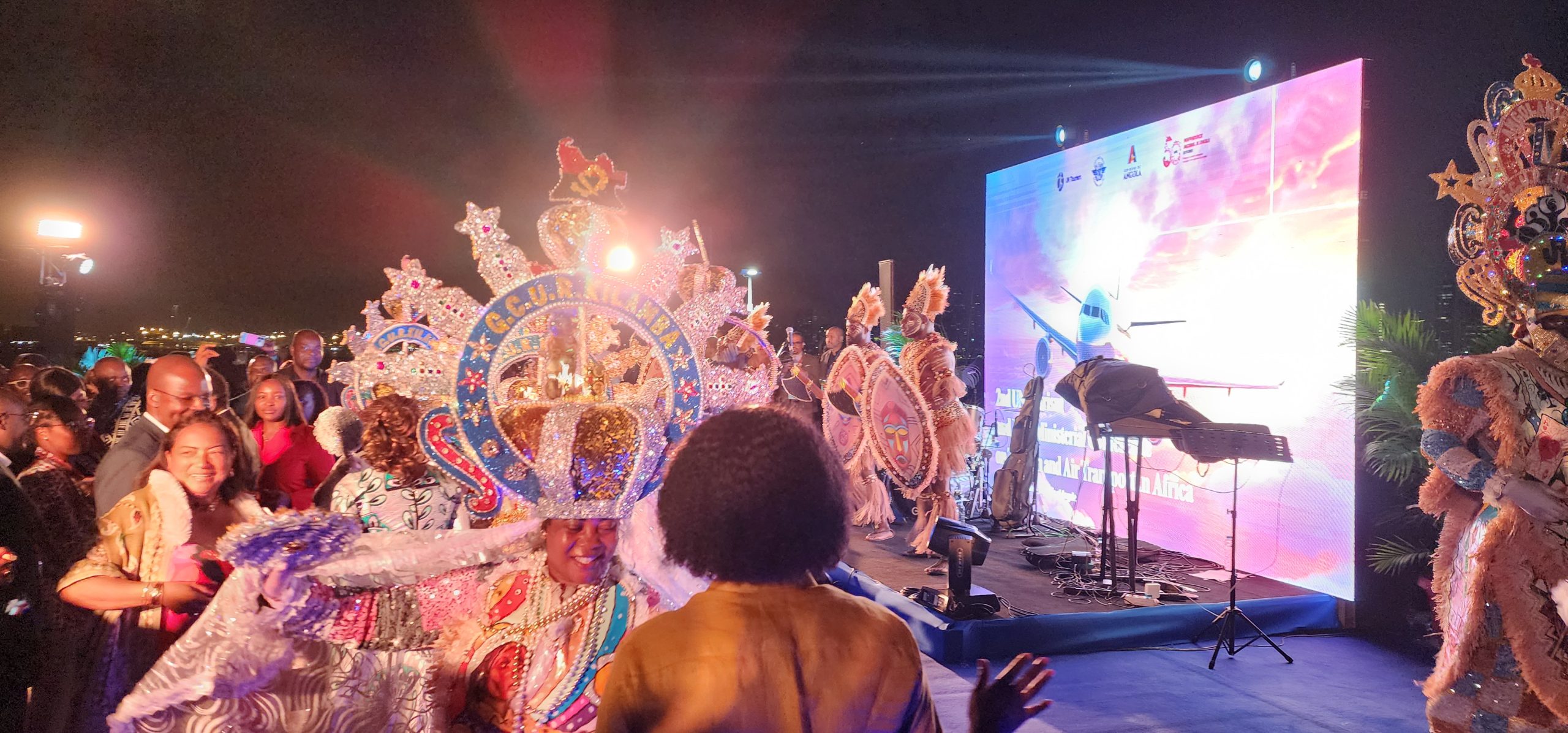
Gesturing like Mandrake only caught me their eye. So, I flapped my hands like wings and clucked like a chicken drawing amused laughter from around. This seemed to have worked; I counted myself lucky that it was not hot dogs I was after. About 15 minutes later they brought me the most delish-smelling, steaming hot chicken wings. ‘Obrigado’ I said after eating, and before leaving quietly. Being Portuguese for nearly five centuries, English is slowly but steadily making a foray into popular culture. On my way back, I came across several graffiti with stylised prepuce and ‘Fuck’ jittered across. A good start to language classes, must say.
The merry math
Why is a poor country so expensive? As a graduate in Economics, I was really curious to find out. I spoke to some locals who had come to attend the aviation conference I was attending, among whom there was an oil executive from an aviation fuel company who had lived there for nearly a decade. It was called the ‘Dutch disease.’
For many years – it still does – Angola’s oil industry generated enormous wealth so disproportionately that the eventually the economy itself got distorted. The wealth stayed with a very few, mostly elite expats. Domestic production was little or nothing that everything was imported making it affordable to only the oil monied. While I did manage to order an omelette successfully at the same place later, one at the Intercon was priced like it came with an entire poultry farm.
For the Freakonomists: The term ‘Dutch disease’ was coined by The Economist in 1977 to describe the economic situation in the Netherlands after discovering massive reserves of natural gas fields in the North Sea. Guess things are pretty alright there now: Some years ago making a film for the Netherlands Embassy in Delhi, the Ambassador reeled off a bunch of statistics for an on-camera interview. What he basically meant was that the country was a highly developed, mixed economy, driven by trade. How they did it was something colonial powers conveniently forgot to teach their holdings.
Beyond Luanda
Though schedules didn’t permit me to go beyond Luanda, I have rain-checked a few: The Kalandula Falls with the Black Rocks of Pungo Andongo – and listen to the legends surrounding them from the locals. Fly my drone camera over the vertiginous volcanic gorge, the Tundavala Gap. Cross into the bordering Namib Desert and spot a few welwitschia mirabilis, living fossils, surviving on coastal fog for centuries. While at these, I will also listen to semba music with the locals – believed to be the ancestor of the Brazilian samba – and eat Moambe chicken, washed down with more Cuca beer.
These would come at a price, but I am sure will be priceless.