
Teju Cole’s ‘Every day is for the thief’ is among my favourite books on Africa – a hark back to my own growing up days in Nigeria. A memorable quote from the book goes:
One goes to the market to participate in the world. As with all things that concern the world, being in the market requires caution. The market – as the essence of the city – is always alive with possibility and danger.
‘Participate in the world.’ The way Teju Cole put it always fascinated me. A simple explanation to a complex, misunderstood, affinity. At least in my case. During the years I lived in Delhi, I would make it a point to visit the pop-up weekly vegetable market nearest my residence sector in Dwarka. My ex-wife found it border-suspicious: ‘People watching’ didn’t cut it as north Indian women were beautiful and adventurous. ‘Practising Hindi’ missed the mark as it involved bargaining and numbers – I was good at neither.
What I didn’t try to explain was the strange bonhomie I felt with the wider humanity, moving en masse from one pushcart stall to another, asking the same question you heard the person before you ask, feeling up the same mango somebody else felt and discarded to discard it yourself. You squinted your eyes – like all others – trying to outwit the coloured light bulbs whose purpose was to camouflage the squishy veggies and fruits. Caught you, you smarmy pie-face! Wink, wink.
Ensorcelling little victories, ephemeral at best. There will always be that one pear housing a minor creature near its core, usually discovered by someone else – an inconvenience when you are the only meat-eater in the house. But you are back the next week and this time you bring back red carrots taking them to be orange, tricked by the clever lights. It doesn’t matter the carrot halwa has to wait but you need to participate in the world.
Strangers encounter each other in the world’s infinite variety; vigilance is needed. Everyone is there not merely to buy or sell, but because it is a duty.
The first thing I always do landing in Addis Ababa is have coffee. It also helps as I am usually off a red eye flight. There is enough time if I am transiting to sit near the heating kettle surrounded by beans and pretend-partake in the ceremonial Buna Tetu coffee ceremony in an airport café itself. There is no real ceremony, of course, but strong coffee served by friendly hostesses. The cups are slightly bigger than a thimble but holds enough potency to rinse your brain with alertness, handy in picking your flight and gate number from the churning sea of flight and gate numbers on the display board. Kaldi, smiles broadly, kisses the gris-gris.
The few times I went to the city, I spent an afternoon in the Entoto Mountain, making friends in the nearby park and eating a lot of freshly made bread washed down with sweet black tea. Another time it was a day at the National Museum where the highlight was Lucy, a landmark find in our understanding of human evolution. There were a few interesting eateries, the easy charm of the people making up for forced atmospherics. You could decide which way the evening went. The flavourful stews and injera are staple and addictive wherever you have it from.
Besides Addis Ababa and around, there is a lot more to Ethiopia, the ‘cradle of humankind’. A visit to the Rift Valley, though not very far from Addis Ababa is long overdue but for a life in transit.
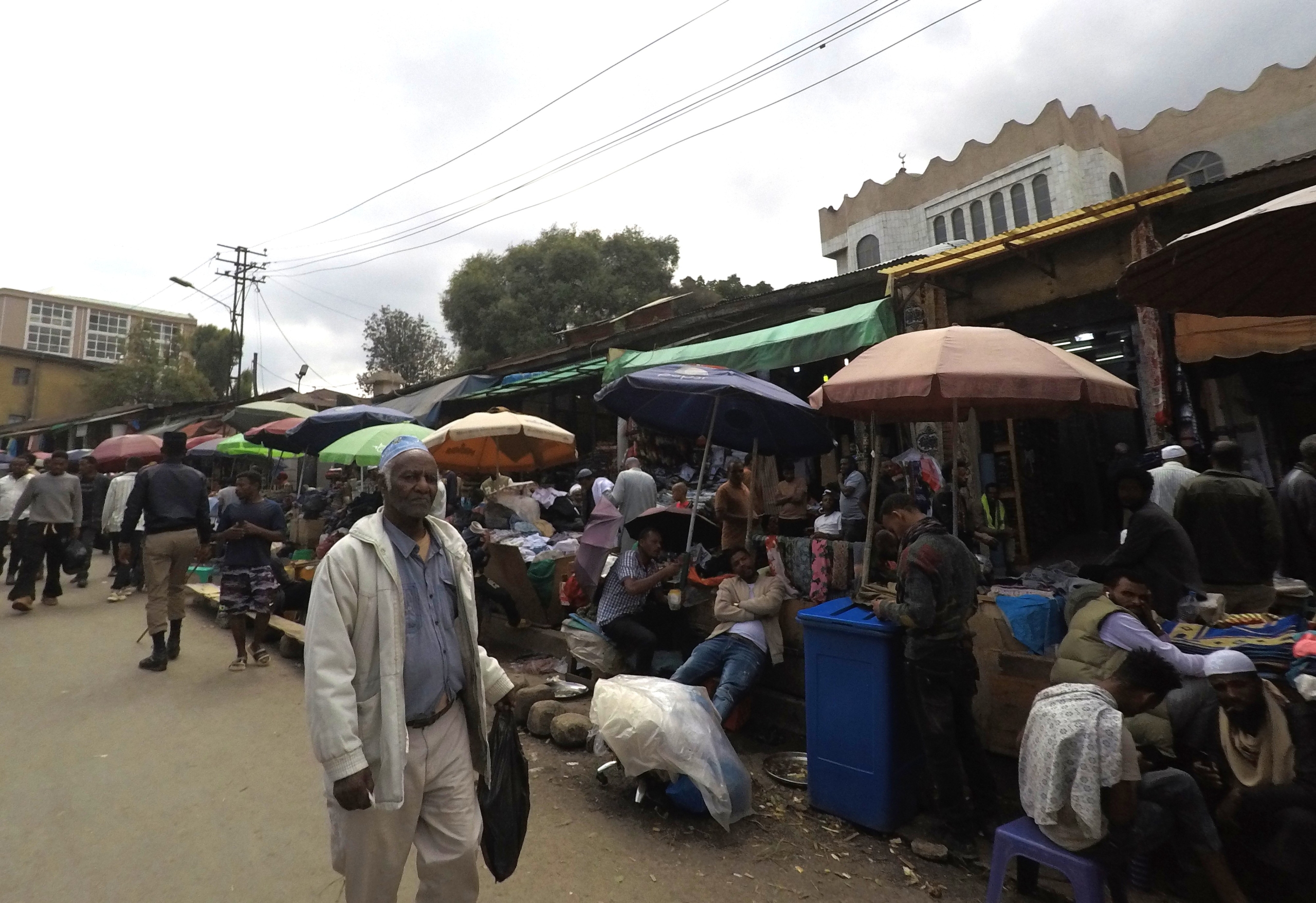
Recently passing through, with just a day to spare, I decided on the Merkato, the largest open market in Africa. David, who manned the travel desk of the hotel I was staying didn’t seem very happy with my choice of attraction. ‘Be careful with your phone.’ ‘Don’t carry too much money.’ He arranged for Geta, somebody he knew well personally, to take me.
Geta was in his early 30s and called Addis Ababa home. Like most African youngsters I met, he had his own well-defined but softly delivered opinions about the government and the way things were run. What could be better. The magick of not waiting for things to happen or come his way but making the most of what was available now, the bird in hand. Agriculture was his goal, but for that he needed capital. Why he was in tourism showing me and the ilk around. Geta and I set off to the sub city of Addis Ketema in his 20-year-old Nissan Patrol.
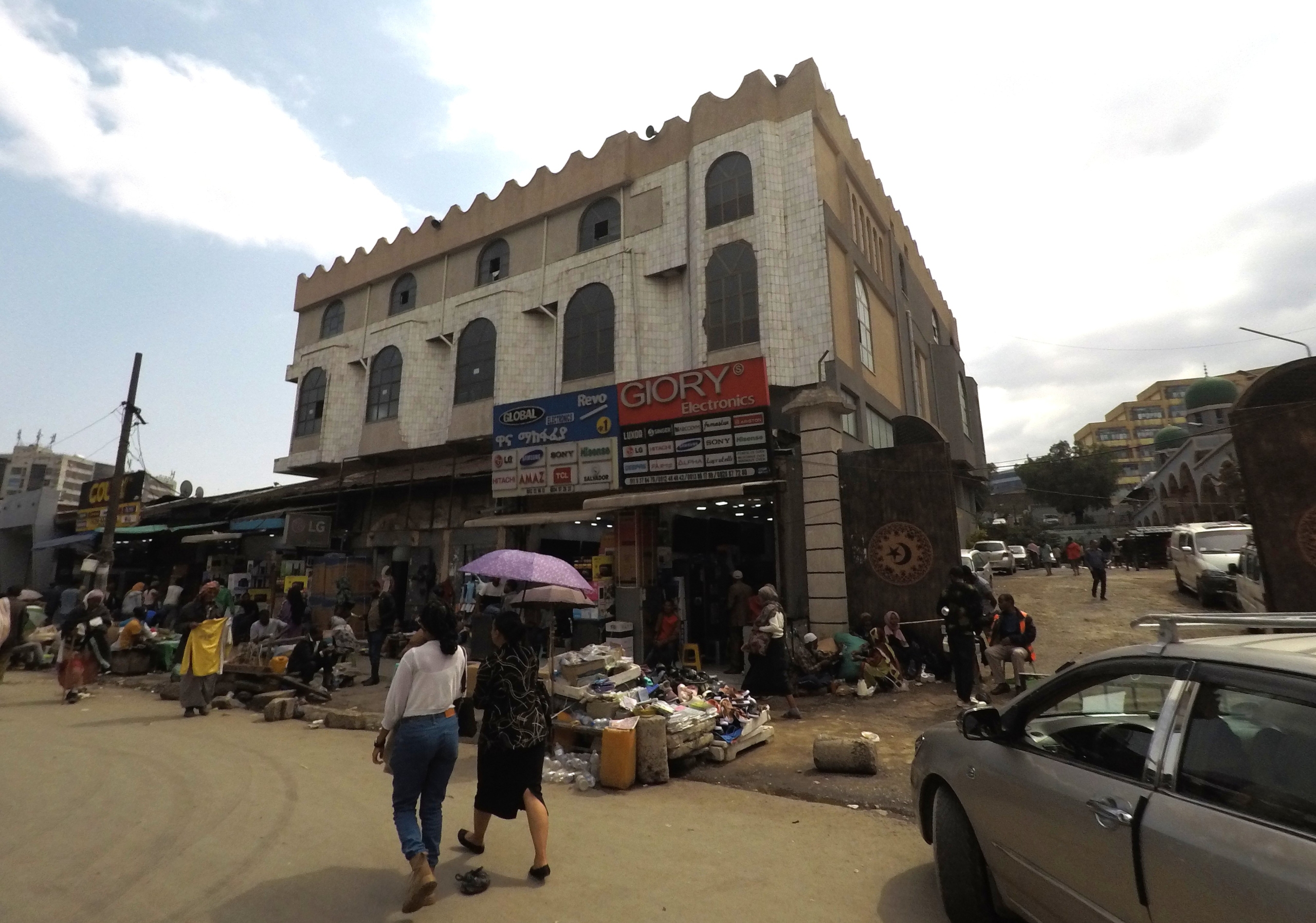
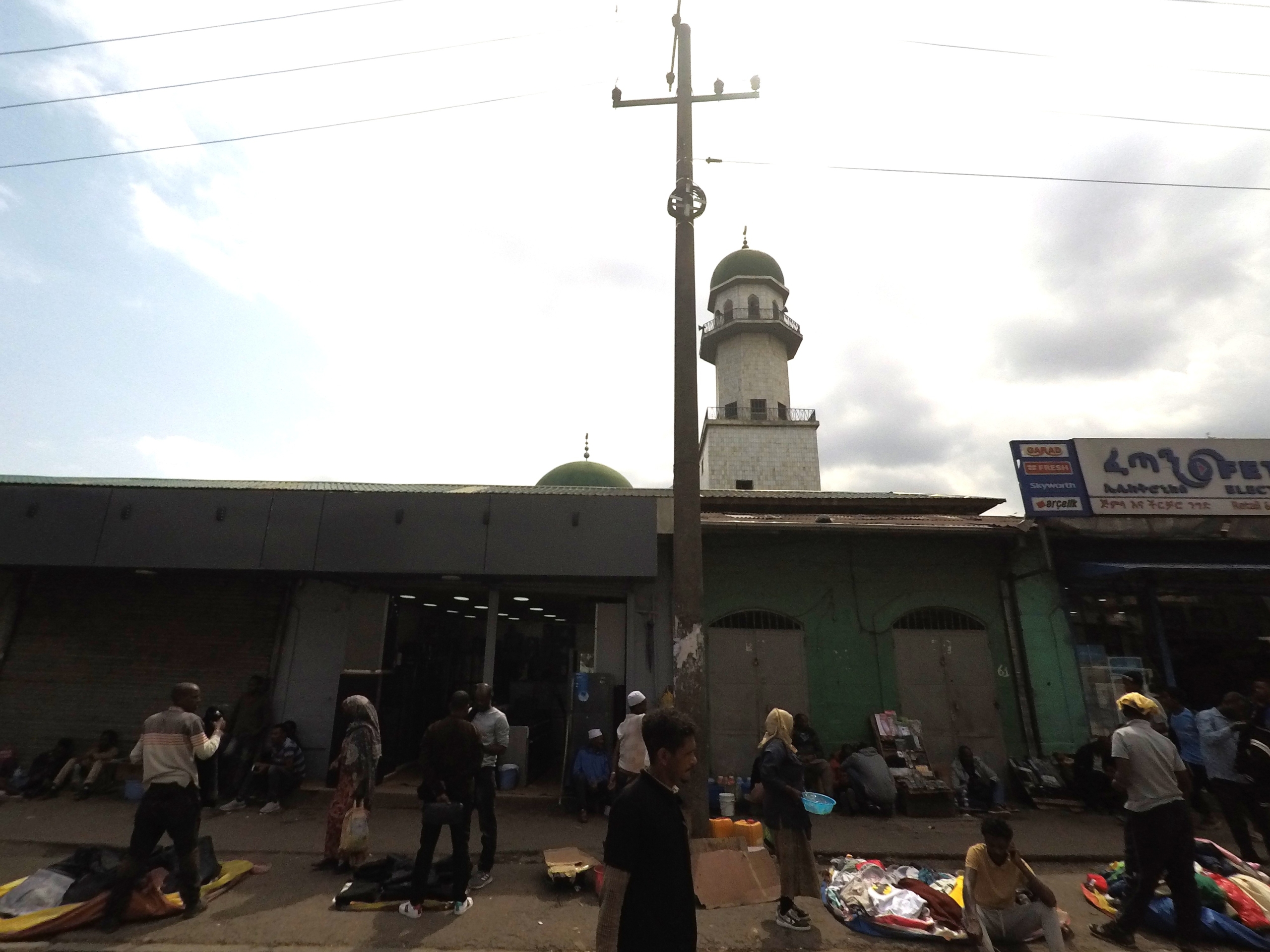
There are places you know you have arrived because you entered through a formal gate or was ushered in by people or announcements. Then there are places you arrive and you know as you gradually become one with the people, the sounds, and the smells. Merkato is in the latter category. These places are usually the underbelly – most tourists give this a miss for clear reasons. Probably what they don’t know is that this is the tick-tock mechanism that makes the city clock work. The ‘Addis Merkato’ as it is locally called, was the outcome of the segregationist policies of the Italian government during the brief colonial period (1936 – 1941), a recurring theme across Africa. Today it has spewed into the largest open area market in Africa.
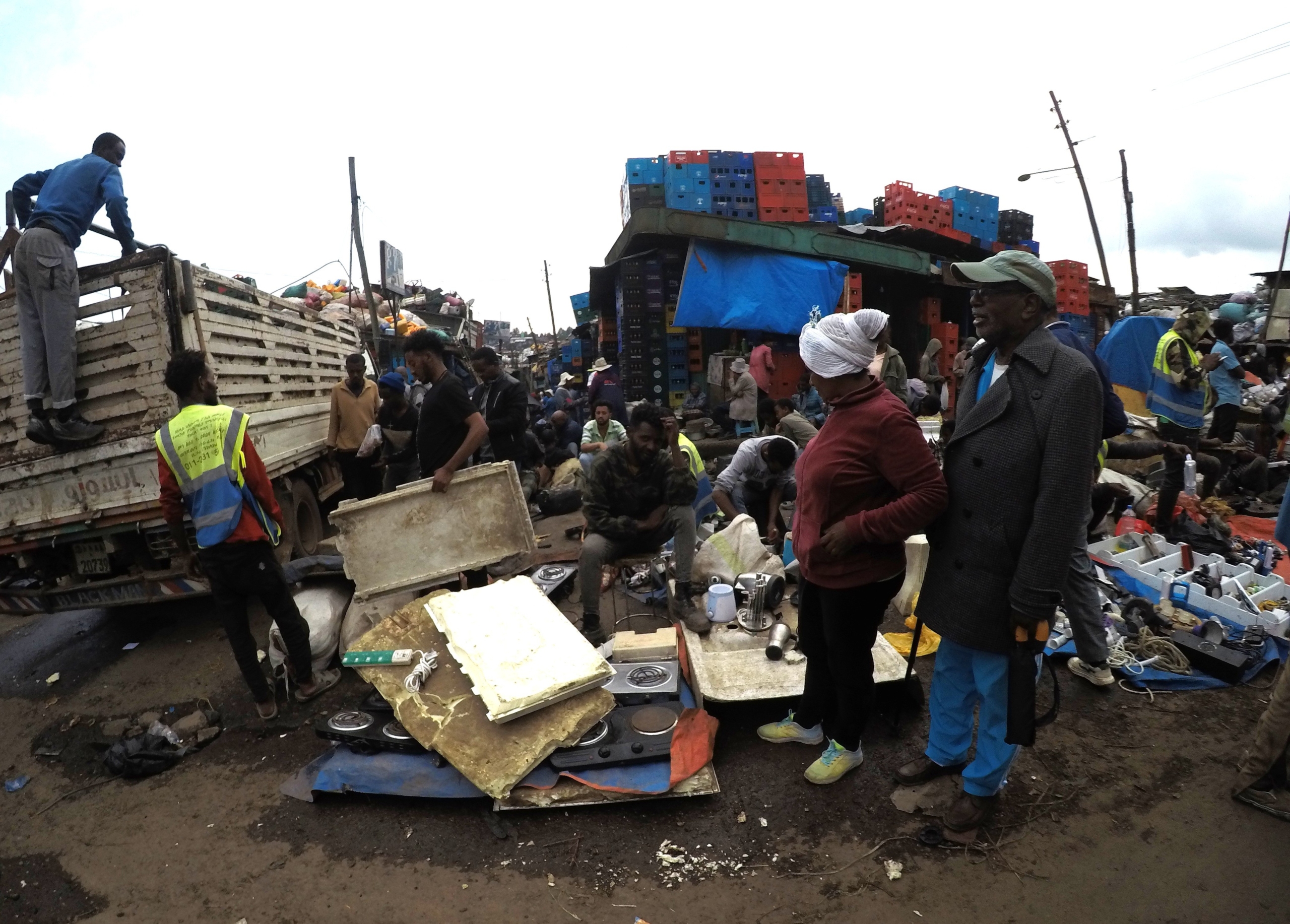
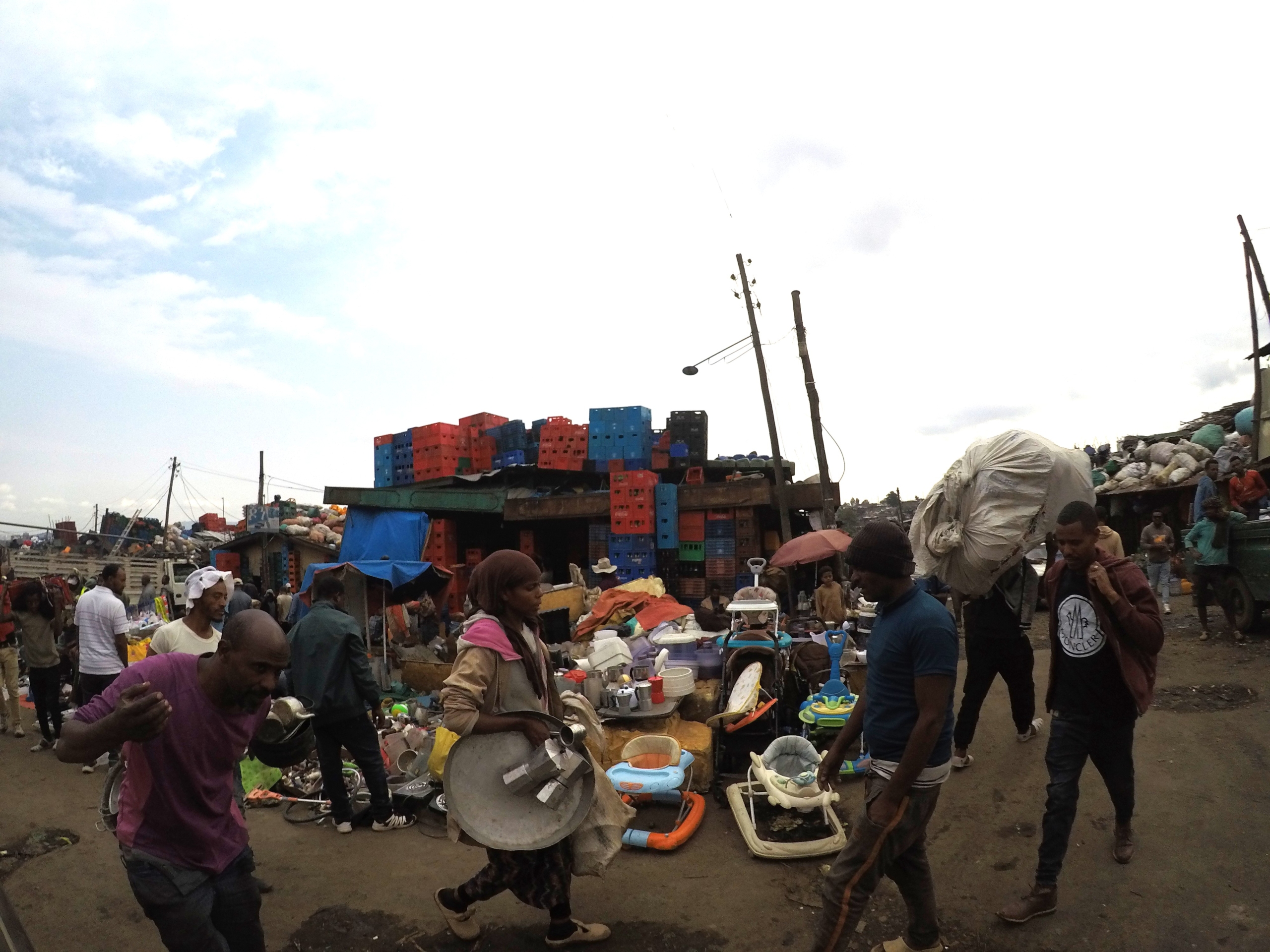
The main commercial activity of Merkato is centred around agriculture products – both retail and wholesale. Geta told me he comes around on most days to buy provisions for his household. To the alien eyes the place is chaotic and arresting: Men hurry holding naked mannequins like stoned, reluctant brides, a boy slides across the street on a wheeled office chair redefining corporate getaway, spatchcocks lined on a metal wire like a Hogwarts flying school. Sneaker brands with an ‘M’ instead of ‘N’ and upturned ‘a’, mobile phone covers featuring Miley Cyrus and Shah Rukh Khan. Many times, I am accosted by snaggle-toothed pirates or terribly friendly ones reeking of gut frying liquor with the whole spectrum of entertainment wares from music CDs to movie DVDs. ‘Tujhe dekha to ye jaana sanam…’ somebody serenades me. ‘Pyar hota hain deewana sanam,’ I return serenaded. We both laughed.
It was much easier than in India where you were offered: Ladies? No? Girls? No? And if you didn’t respond by now, Mans? I usually did respond at this juncture worried about who would be sent my way next.
If you sit in your house, if you refuse to go to market, how would you know of the existence of others? How would you know of your own existence?
Probably after centuries of bondage, the manumitting has been so momentous that there is a still-continuing existential euphoria in African lives. And it is wildly infectious. There were lads who lived in lean-tos where they crawled into and took turns sleeping. They worked at the scrapyard, unloading old white goods as they arrived and dismantling them into salvageable parts. With nothing to sell me, just more Hindi songs as I passed them.
Amidst all the disarray and tough living, there was still some order and harmony – you had to spend some time in this cacophonous city-pit to discern it. There were designated areas for different goods. The readymade clothes was in an area locally referred to as the ‘Dubai Market’, Geta told me. It was not all imitation and cheap stuff, but there were shops selling premium quality textiles made in Turkey and Italy. I found leather shoes with the distinctive full grain smell, in dandy designs. But I had left serious money in my room, thank you David!
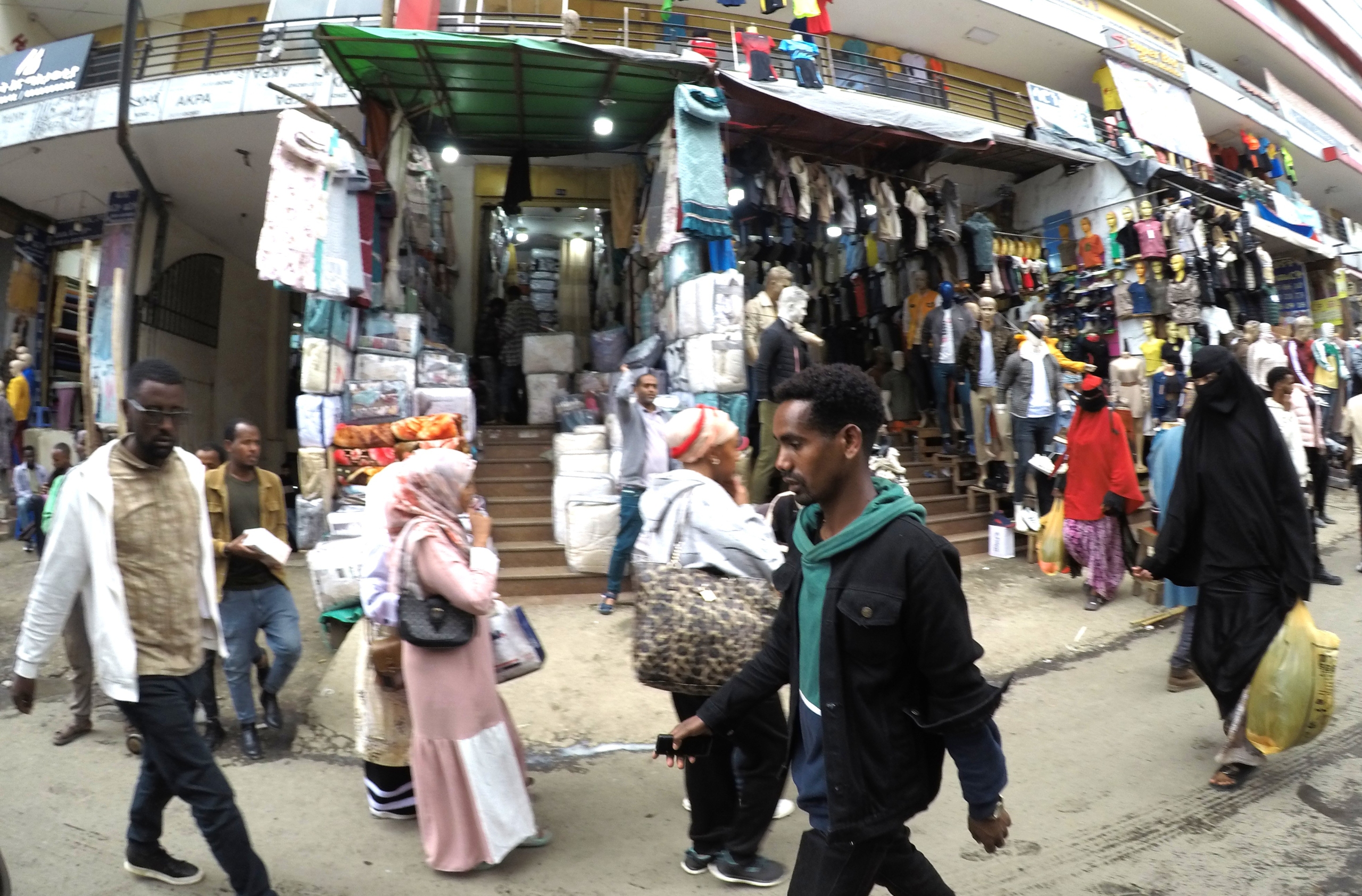
Building materials, farming equipment, electronics, spices, and of course food – all found their own expansive quarters in this milling, toiling, people-crammed place. The vegetables and fruits – and juices – were fresh. Ethiopia was a land with fertile loamy soil and the highlands especially, were bountiful. Like India, the majority of farmers owned only small plots barely enough for subsistence farming. They were all in the cities to escape the erratic climate, dreamt of going back if things ever got better. The Rural Transformation Centres (RTC) support farmers to an extent with collection, sorting, and storing before packaging and transport. But there is work.
The Merkato featured prominently in many walking tour itineraries. I saw one group chaperoned tightly along the periphery of the city slough that was Addis Merkato. There seemed to be hushed disquisitions between group members and taking of photographs with jolting whispers. Here was survival at its hustle-peak, coexistence, even humanity itself of a different order.
Large parts of the Merkato was gutted by a fire in October last year, but today the devastation is spoken of as a distant memory. Resilience in a league of its own.
Then, that’s Africa for you.
